Design measured by whether the work got easier
A beautiful interface that adds a step to a hundred-times-a-day task is a worse interface. We design against the task, then check the numbers moved.
- Measurably fewer steps in your highest-frequency tasks
- Shorter onboarding for new staff on internal tools
- Consistency that holds as the product grows
The problem we hear most, and how we solve it
If this sounds like your business, you're in good company. Here's what changes when we work together.
The problem
Internal software is where design usually gets skipped. The result is a screen with forty fields, a workflow that takes eleven clicks, and a training burden that makes hiring harder. Customer-facing products have the opposite failure: a polished surface over a flow that quietly loses people at step three of five.
What we do about it
We design from the task inward. What is the person trying to accomplish, how often, under what pressure, and what do they need visible at that moment? Then we design the smallest interface that supports it — and validate with the people who will use it before it becomes code.
How we can help with UI/UX Design
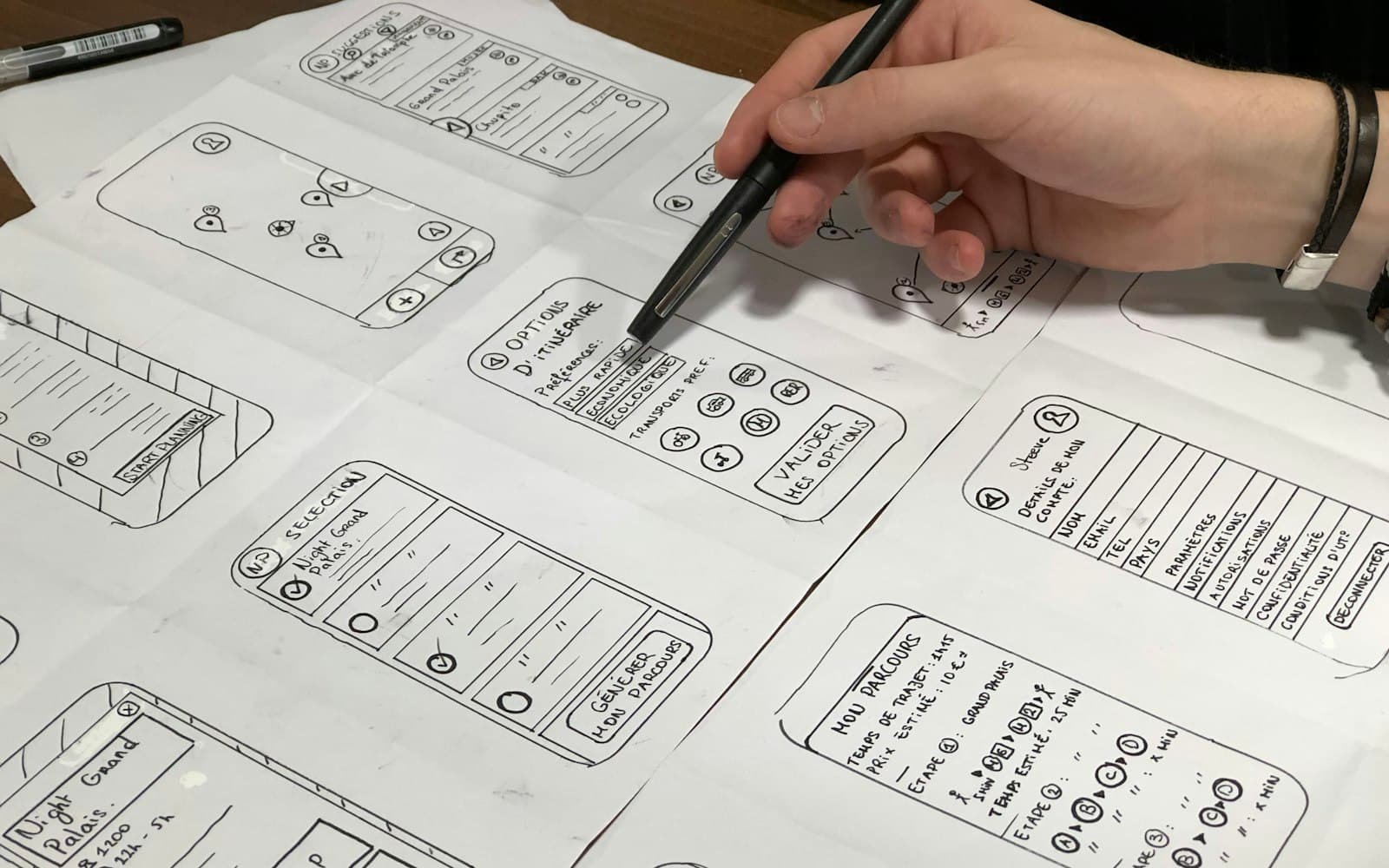
Research with actual users
Interviews and over-the-shoulder observation with the people who will use the software daily, not a proxy in a meeting room.
Task-level flow design
Each core task mapped end to end and reduced to its necessary steps, with the frequency of use driving how much screen real estate it earns.
Usability testing before build
Prototypes tested with five to eight real users. Finding the confusion in a prototype costs an afternoon; finding it in production costs a sprint.
Design system, not screen files
Tokens, components and states delivered as a system, so the twentieth screen looks like it belongs with the first without more design time.
Accessibility built in
Contrast, focus order, target sizes and screen-reader semantics designed rather than audited — much cheaper before implementation than after.
Engineering-ready handover
Specifications, states, edge cases and empty states documented, with design tokens that map one-to-one onto the front-end implementation.
Everything you need, handed over properly
No vague promises. Here's what you can expect to have when the work is done.
Tools & technologies we use
- Figma
- React
- Next.js
- TypeScript
- Measurably fewer steps in your highest-frequency tasks
- Shorter onboarding for new staff on internal tools
- Consistency that holds as the product grows
- Accessibility handled at design time, not as remediation
- Less rework, because confusion is found in prototypes
A clear process, with no surprises
Interviews and observation first, then flows, then low-fidelity structure tested with real users, and only then visual design. Deliverables are a working component library in Figma with tokens that map directly to the front-end implementation, so what gets built matches what was designed without a translation layer.
- 1
Meet Up
Schedule a meeting with us. Tell us about your business and help us understand your priorities and needs.
- 2
Team Up
After you've approved our proposal, we'll seamlessly implement the solutions so you immediately start benefiting from your partnership with ITS.
- 3
Scale Up
See how managed technology can set you up for success and continue growing your business. If not, we'll happily refund your investment.
Fewer steps in the tasks that matter most, measurably faster completion, and a design system that keeps the next twenty screens consistent without another design engagement.
What every client can count on
Say the difficult thing early
If an approach is wrong, a date is at risk, or the feature you asked for will not solve the problem, you hear it while there is still time to act. Comfortable silence is the most expensive thing in software.
Build it to be maintained
The code we write will be read far more often than it was written, frequently by someone else. Clarity beats cleverness in every case where the two conflict.
Measure what we claim
Faster, better and more reliable are only meaningful with a baseline and a number after. We agree the measurement before starting the work.
Leave you independent
Documentation, handover and code quality are aimed at a client who could take the system entirely in-house. Retention through lock-in is not a business we want.
Questions clients usually ask
Yes — design-only engagements are common, and the handover is written for an engineering team we will never meet. That said, we will flag anything in the design that will be expensive to implement, which is easier to do when we know the stack.
We agree the metrics before starting: task completion time, error rate, drop-off at a specific step, support tickets on a particular screen. Baseline first, measure after. 'It looks better' is not a result.
Often, and usually incrementally. A full redesign shipped at once is risky and expensive; reworking the three highest-traffic flows first delivers most of the value and gives you real data before committing to the rest.
A Figma file with a token-based component library, documented flows, prototype links, a written research summary, and specifications covering states and edge cases — loading, empty, error, permission-denied — not just the happy path.
More answers in the full FAQ.
Often combined with
- Custom Software DevelopmentSystems built around how your business actually works
- Web Application DevelopmentFast, secure applications that hold up under real load
- Mobile App DevelopmentAndroid and iOS apps people keep on the home screen
- ERP & Business Management SolutionsOne system for finance, inventory, sales and operations
- Cloud & DevOpsInfrastructure you can deploy to on a Friday
- API & System IntegrationConnecting systems that were never designed to talk
- AI & Intelligent AutomationAutomation applied where it actually pays back
Ready to talk about ui/ux design?
Tell us what your current process is costing you in time, errors or missed opportunities. That's where every useful conversation starts.
- We reply to project inquiries within one business day.
- Ready-made products to configure, or software built from scratch